Breast implants · Planning guide for international patients
Breast Augmentation in Turkey
How implant size, type and placement are decided, what breast augmentation costs in Turkey, which implant details must be in writing and what recovery abroad involves.
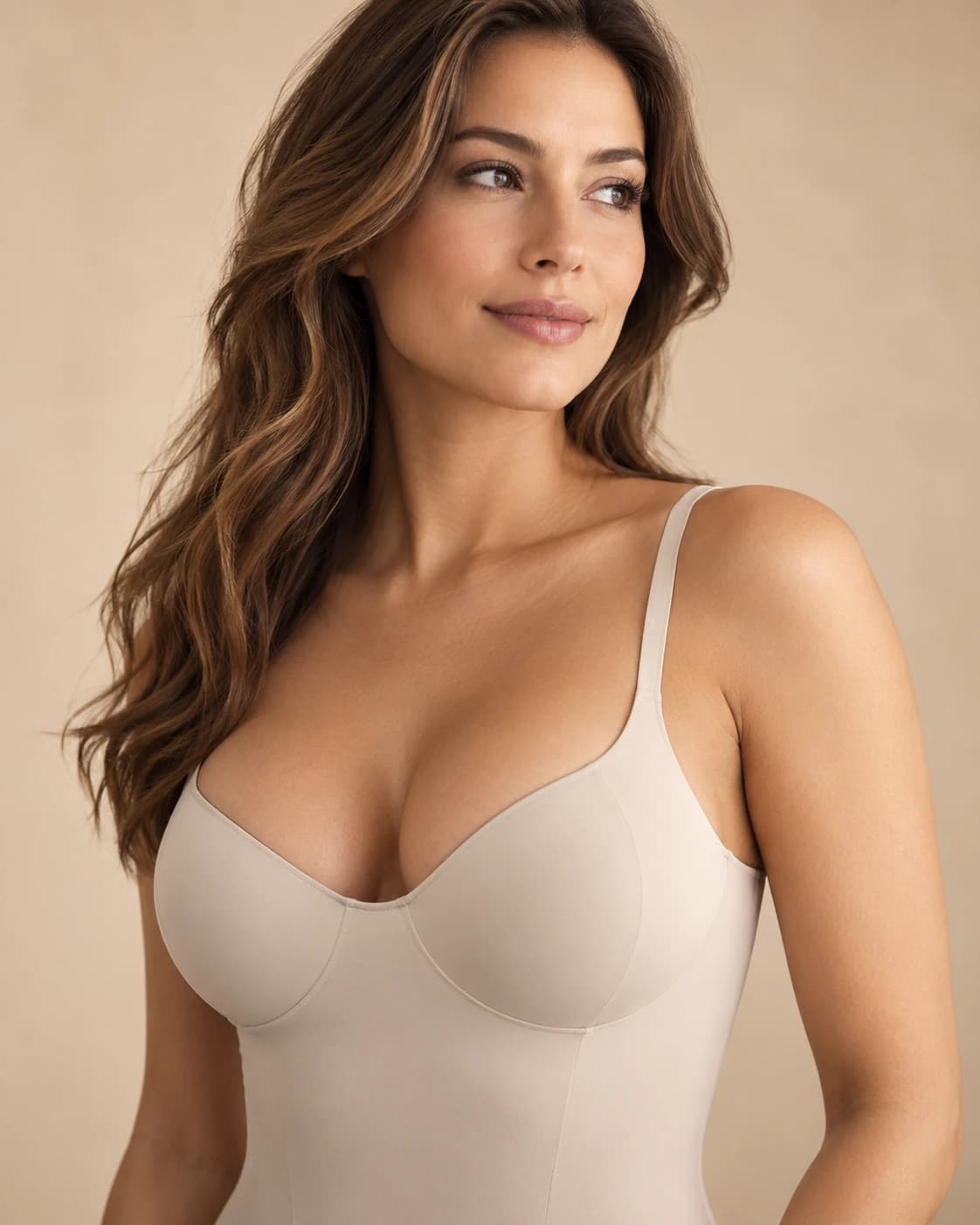
- Hospital stay
- 1 night
- Recommended Turkey stay
- 5–7 days
- Initial recovery
- 5–7 days
- Final result
- 3–6 months
Breast augmentation places an implant behind each breast to increase volume, improve upper-breast fullness or reduce a size difference between the breasts. Many international patients consider it in Turkey, largely because private package prices are generally lower than in the UK, Western Europe and North America.
An implant is a medical device that stays in your body, so a breast augmentation decision is really several decisions: the implant's size, shape, fill and surface; where it sits; where the incision goes; and whether your breasts also need lifting. Those choices depend on your chest measurements and tissue quality, which only an examination can confirm — and they drive both the result and the price.
01
Who Breast Augmentation Suits — and When a Lift Is the Better Answer
Breast augmentation is usually considered by people who want larger breasts, who have lost volume after pregnancy, breastfeeding or weight loss, or who have a noticeable difference in breast size. It suits breasts that are reasonably well positioned on the chest.
When the nipple sits at or below the fold under the breast, or most of the breast tissue hangs below that fold, an implant alone rarely gives the shape people expect: the breast gets bigger but stays low. That situation is ptosis, and it usually needs a breast lift, either instead of implants or combined with them in an operation called augmentation-mastopexy. The combined operation takes longer, leaves more scars and costs more, so the question "do I need a lift?" belongs at the very start of your planning.
Other factors a surgeon will weigh:
- the thickness of your own breast tissue and skin, which decides how well an implant is covered
- asymmetry of the breasts, nipples or chest wall
- smoking, which increases wound-healing problems
- plans for pregnancy or breastfeeding
- personal or family history of breast cancer, and when your last breast imaging was done
- your weight stability and general health
02
The Implant Decisions
Size and dimensions
Cup sizes are not a reliable way to choose an implant. Surgeons choose by measurements — breast base width, tissue thickness, skin stretch and the distance from nipple to fold — and then by volume within that range. An implant wider than the breast can show edges or stretch the tissue; one that is too heavy for thin tissue increases the chance of later problems. Sizers worn in a bra help you visualise options, but they do not predict the result exactly.
Profile and shape
Implants of the same width come in different profiles, meaning how far they project forward. Round implants add fullness to the upper breast and look the same if they rotate. Anatomical, or teardrop, implants are fuller at the bottom and must stay in position to look right.
Fill: silicone or saline
Most augmentations use cohesive silicone gel implants, which many patients find feel closer to breast tissue, especially when their own tissue is thin. Silicone ruptures may not be noticeable, which is why imaging surveillance is recommended. Saline implants deflate visibly if they rupture but can ripple more.
Surface
Implants are smooth or textured. Breast implant-associated anaplastic large cell lymphoma (BIA-ALCL), a rare cancer of the immune system that develops in the scar tissue around an implant, has been associated mainly with textured implants. Ask which surface is proposed and why.
Manufacturer and device documentation
In Turkey, medical devices, including breast implants, are regulated by the Turkish Medicines and Medical Devices Agency (TİTCK). Before surgery, ask which manufacturer and model will be used; after surgery, make sure you receive the implant card or a written record of manufacturer, model, volume, profile, surface and lot or serial numbers for each side. You will need these details for future imaging, revision or any safety notice about the device.
03
Implant Placement and Incision
| Choice | Options | What it affects |
|---|---|---|
| Placement | Above the muscle (subglandular), partly below it (dual-plane) or below it (submuscular) | Visibility of implant edges in slim patients, movement when the chest muscle contracts, early discomfort |
| Incision | In the fold beneath the breast (inframammary), around the areola (periareolar) or in the armpit (transaxillary) | Scar position, access for future revision, possible effect on breastfeeding and nipple sensation |
| Pocket control | How precisely the space for the implant is created | Implant position and symmetry over time |
The inframammary fold incision is the most commonly used because it gives direct access and leaves a scar that sits in the crease. Placement is largely decided by how much natural tissue you have: patients with little breast tissue often get better coverage with dual-plane or submuscular placement.
04
What Can Change After the Examination
A plan made from photographs is a starting point. At the in-person consultation the surgeon measures your chest and tissue and may recommend:
- a different implant width or volume than the one you had in mind
- a different placement because your tissue is thinner or thicker than photographs suggested
- a lift, because the degree of ptosis is greater than it looked
- correction of asymmetry with different implants on each side
- postponing surgery for breast imaging, a lump that needs assessment or a health issue
Each of these can change the price. Before you travel, ask how implant changes are charged, whether your deposit is refundable if a lift is recommended and not wanted, and what happens if the surgeon advises against surgery.
05
Breast Augmentation Cost in Turkey
In September 2026, all-inclusive breast augmentation packages advertised by Turkish clinics mostly fell between about €3,000 and €5,500. Packages at the upper end typically named higher-priced implant brands, a hospital stay and more senior surgeons; augmentation combined with a lift was advertised at higher prices.
These figures come from providers' own websites and international booking platforms. They are advertised prices, not quotes, and a written quote issued after examination is the only figure to plan around.
| Cost factor | Why it may change the price | What to confirm |
|---|---|---|
| Implant manufacturer and model | Brands and implant types differ in cost and in warranty terms | Brand, model, fill, surface, profile and volume on the quote |
| Augmentation alone or with a lift | Augmentation-mastopexy is a longer, more complex operation | Which operation is quoted, and the price if a lift is advised after examination |
| Asymmetry correction | Different implants or tissue work on each side | Whether both sides are priced the same |
| Surgeon | Seniority and breast-surgery focus affect fees | Who performs the operation from start to finish |
| Facility and hospital stay | Hospital care with an overnight stay costs more than day surgery | Where surgery takes place and how many nights are included |
| Anaesthesia | General anaesthesia by a specialist anaesthetist is standard | That the anaesthetist's fee is included |
| Garments and aftercare | Surgical bras, dressings and follow-up visits vary between packages | Number of support bras and follow-up checks included |
| Travel services | Hotel nights, transfers and interpreters differ widely | Which are included and the cost of extra nights |
The same operation abroad
The UK and US figures are published by each country's own national body; the Türkiye range is the one recorded on this site from Turkish providers. Nothing is converted between currencies, and the US figure is a surgeon fee that excludes anaesthesia and the operating room — so the real US total is higher than shown.
| Procedure | TürkiyeAdvertised package prices | United KingdomNHS — typical private total | United StatesASPS — surgeon fee only | Continental EuropeNo published source |
|---|---|---|---|---|
| Breast Implants | €3,000 – €5,500 | £3,500 – £8,000 | $4,875Surgeon fee only — not a totalFigure is for augmentation with implants; ASPS gives $5,719 for fat grafting. | Not published |
What each figure includes
Türkiye
€3,000 – €5,500What the figure covers
Range of prices advertised by Turkish providers
Observed on provider websites by this siteRecorded 2026-09-15
United Kingdom
£3,500 – £8,000What the figure covers
Typical total price paid privately
Not included
- Consultations
- Follow-up care
- Any further surgery
NHS (nhs.uk)Recorded 2026-09-08
United States
$4,875What the figure covers
Average surgeon fee only
Not included
- Anaesthesia
- Operating room / facility fees
- Other related expenses
Because those are excluded, this is a floor rather than what a patient pays. The real total is higher.
Figure is for augmentation with implants; ASPS gives $5,719 for fat grafting.
American Society of Plastic Surgeons (ASPS)Recorded 2026-09-08
06
What a Breast Augmentation Package May Include
Depending on the clinic and quotation, packages may include:
- consultation, measurements and pre-operative blood tests
- the implants, the operation, anaesthesia and operating-room fees
- one night in hospital
- a post-operative support bra and prescribed medication
- a wound check and follow-up visits before you fly
- hotel nights, airport and clinic transfers, and an interpreter
Some quotes also mention breast ultrasound before surgery or a manufacturer's warranty programme. Anything not written in the quotation should be treated as excluded.
07
What Your Breast Implant Quote Should Name
- the operation: augmentation alone or augmentation with a lift
- implant manufacturer, model, fill, surface, shape, profile and volume for each side
- placement and incision site
- the operating surgeon and the anaesthetist arrangement
- the hospital or clinic and the number of nights
- tests, medication, bras and dressings
- the number and timing of post-operative checks
- how capsular contracture, implant malposition or rupture would be managed and charged
- manufacturer warranty terms and how you would claim from abroad
- deposit amount, currency, refund conditions and what happens if the plan changes after examination
08
Surgeons Offering Breast Augmentation in Turkey
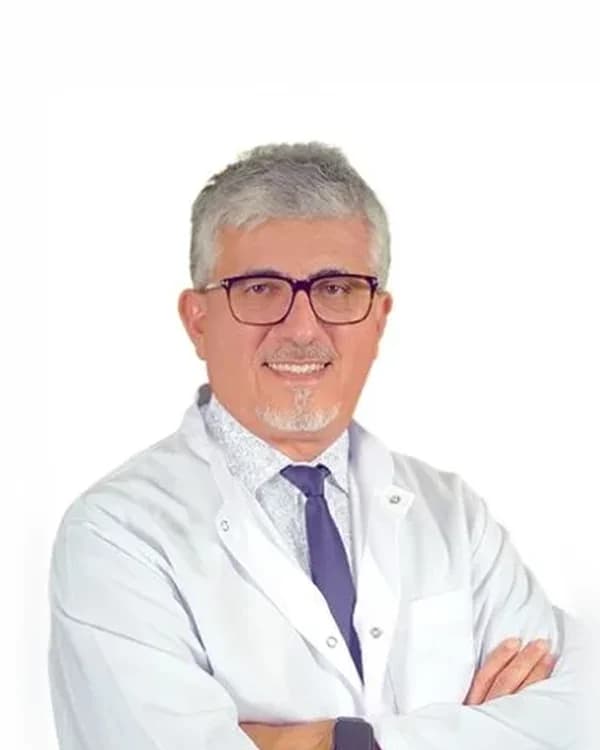
These surgeons list breast augmentation on their own website, a hospital staff page or our register. Listing order reflects profile completeness, not merit.
09
Choosing a Surgeon for Breast Augmentation
- Specialist training in plastic, reconstructive and aesthetic surgery. Breast augmentation in Turkey is performed by plastic surgeons; ask for the specialist certificate.
- Measurement-based planning. A surgeon who recommends a size before measuring your chest is choosing an implant, not planning an operation.
- A clear view on lifts. Ask directly whether your breasts need lifting and why or why not.
- Implant transparency. The surgeon should name the device and explain the reasons for its surface, shape and placement.
- Complication management. Ask how often they revise their own augmentations, for what reasons, and who pays.
- Relevant photographs. Compare results in patients with a similar starting breast shape and chest width, photographed at least several months after surgery.
- Long-term follow-up. Implants need monitoring for years; ask how the practice supports patients who live abroad.
10
Choosing a Hospital or Clinic
Breast augmentation is usually performed under general anaesthesia and often includes an overnight stay. Look for a hospital or licensed surgical facility with a specialist anaesthetist, post-operative monitoring and a plan for bleeding under the skin, which is uncommon but needs prompt treatment. Facilities serving international patients should appear on the HealthTürkiye list of certified health service providers; Turkey's 2025 health tourism regulation also requires complication insurance for procedures performed in operating rooms.
33 hospitals and clinics list breast implants.
11
Before-and-After Photos
Breast photographs are most informative when the starting shape — tissue volume, nipple position and chest width — is similar to yours, the photographs use the same pose and lighting, and the follow-up is long enough for implants to settle, which usually takes a few months. Early photographs can look higher and fuller than the final result.

 BeforeAfter
 BeforeAfter
 BeforeAfter
12
The Operation
Most breast augmentations take around one to two hours, longer when combined with a lift. Under general anaesthesia, the surgeon makes the incision, creates a pocket in the chosen plane, often tries sizers to confirm volume and symmetry, inserts the implants and closes in layers. Many patients stay one night in hospital.
13
Recovery After Breast Augmentation
| Period | What is typical | What to plan |
|---|---|---|
| First days | Tightness and soreness across the chest, more with implants under the muscle | Help with lifting, dressing and luggage |
| Around one week | Wound check; many patients return to light daily activity and desk work around 5–7 days | A supportive bra worn as instructed |
| Weeks two to six | Swelling reduces; implants begin to soften and drop | No heavy lifting, upper-body training or sleeping on the front until cleared |
| Months three to six | Implants settle into their final position | Remote photographs or an in-person check as agreed |
| Long term | Implants are monitored, not forgotten | Imaging follow-up for silicone implants as recommended by your doctor |
14
Risks and Long-Term Considerations
Breast augmentation is a common operation, but it carries surgical and device-related risks. Surgical risks include bleeding under the skin (haematoma), fluid collection, infection, poor scarring, changes in nipple or breast sensation and asymmetry.
Device-related risks need particular attention because they can appear years later:
- Capsular contracture — tightening of the scar capsule around the implant, which can make the breast firm, painful or misshapen and is a common reason for revision surgery.
- Rupture and deflation — silicone ruptures can be silent; the U.S. Food and Drug Administration recommends imaging surveillance for silicone gel implants even without symptoms.
- Malposition and rippling — implants moving from their intended position or visible folding in thin tissue.
- BIA-ALCL — a rare lymphoma associated mainly with textured implants; new swelling, a lump or persistent fluid around an implant years after surgery needs medical assessment.
- Systemic symptoms — some people report symptoms they attribute to implants, often called breast implant illness; research into causes is ongoing.
Breast implants are not lifetime devices. The longer implants are in place, the more likely further surgery becomes, so plan for long-term costs and follow-up as part of the decision.
15
Pregnancy, Breastfeeding and Breast Screening
Many women breastfeed after augmentation, although no surgeon can promise it; incisions around the areola may be more likely to affect ducts or nerves. Pregnancy and breastfeeding change breast size and skin, and can alter the appearance of augmented breasts, which is why some patients wait until they have completed their family. Tell radiographers you have implants before mammography, because positioning and interpretation differ.
16
How Long to Stay in Turkey After Breast Augmentation
Patients commonly plan around 5–7 days in Turkey after breast augmentation, and longer when a lift is included. That usually covers a wound check and a review of implant position before flying. When you can travel depends on your recovery, the operation performed and your surgeon's assessment, and long flights require attention to clot prevention. Arrange help with luggage, and carry your implant card, operation notes and wound-care instructions in your hand luggage.
17
What to Send for a Preliminary Assessment
- age, height, weight, current bra size, smoking status, medication, allergies and medical conditions
- pregnancies, breastfeeding and weight changes, with dates
- any previous breast surgery, with operation notes and implant details if relevant
- recent breast imaging reports, and any family history of breast cancer
- your goal: the size range and shape you hope for, and what you want to avoid
- photographs from the front, both sides and both three-quarter views, arms relaxed, standing straight, in even light
Breast photographs are sensitive medical information. Send them only through a secure channel to a provider you have identified, keep your face out of frame, and ask how the images are stored. A remote review supports planning; the implant choice is confirmed only at examination.
18
From Enquiry to Implant Follow-Up
- Share your history, goals and photographs through a secure request.
- Receive a preliminary opinion, including whether a lift may be needed.
- Ask for a written estimate that names the implant and the operation.
- Compare surgeons, facilities, implant choices and aftercare, not only totals.
- Agree dates, deposit terms and the consequences of a changed plan.
- Travel to Turkey for measurement and examination.
- Confirm the final implant, placement and incision with the surgeon.
- Have surgery if it is clinically appropriate.
- Attend post-operative checks and collect your implant documentation.
- Fly home when your surgeon considers it appropriate.
- Continue follow-up and imaging surveillance at home, keeping the operating team informed.
19
Breast Augmentation in Istanbul and Other Cities
Breast augmentation is widely available in Turkey's large cities, with the largest numbers of surgeons in Istanbul, Ankara and İzmir. Where you choose affects travel time, the choice of facilities and how easily you can return for a check.
20
Request Breast Augmentation Options
Share your goals, measurements if you know them, previous breast history and photographs through a secure request to receive breast augmentation options. We reply with options; a request is not a booking or medical advice, and the final implant and operation are always decided at examination.
21
Frequently asked questions
How do I choose the right breast implant size?+
The right implant size is decided by your chest measurements and tissues as much as by the look you want. Surgeons typically measure breast base width, chest wall shape, skin stretch and how much natural tissue will cover the implant. An implant that is too wide or heavy for your frame can stretch tissue, show edges or increase the chance of later problems. Cup sizes are inconsistent between brands and countries, so volume in cc is only a guide. Trying sizers in a bra, and sometimes 3D imaging, can help you visualise options, but neither predicts the result exactly.
What is the difference between silicone and saline breast implants?+
Silicone implants are filled with cohesive gel, while saline implants are filled with sterile salt water. Many patients and surgeons find silicone feels closer to natural breast tissue, especially in slim women with little coverage. If a silicone implant ruptures, the gel often stays in place and the rupture may not be noticeable, so imaging is used to check. A ruptured saline implant deflates visibly, and the saline is absorbed by the body. Saline implants may show rippling more easily. Your surgeon can explain which types and brands they use and why.
Should I choose round or teardrop breast implants?+
Round and teardrop (anatomical) implants suit different goals and anatomy, and neither is right for everyone. Round implants add fullness to the upper breast and do not look distorted if they rotate. Teardrop implants are fuller at the bottom, which can give a more gradual slope in some patients, but they rely on staying in position, so rotation can alter breast shape. Implants also come in different profiles, meaning how far they project for a given width. Surface texture is part of this decision too, because textured implants have been associated with a rare lymphoma called BIA-ALCL.
Should implants go above or below the muscle, and where is the incision?+
Implants can be placed above the chest muscle (subglandular) or partly beneath it (submuscular or dual-plane), and the choice usually depends on how much natural tissue you have. Placement under the muscle provides more coverage and can reduce visible edges in slim patients, but may cause more early discomfort and movement of the implant when the muscle contracts. The most common incision is in the fold beneath the breast; others are placed around the areola or in the armpit. Each incision has different implications for scarring, visibility and future revision surgery, which your surgeon should explain.
Do I need a breast lift instead of, or as well as, implants?+
You may need a breast lift if your nipple sits at or below the fold beneath your breast, or if breast tissue hangs low after weight change, pregnancy or ageing. Implants restore volume but provide limited lift, and placing a large implant under drooping tissue can create an unnatural shape. A lift, or mastopexy, removes excess skin and repositions the nipple, and it can be combined with implants in one operation called augmentation-mastopexy. Combined surgery is more complex and leaves additional scars. Learn more about breast lift surgery to compare the options.
What are the main risks of breast implants?+
The main implant-specific risks are capsular contracture, where scar tissue around the implant tightens and can make the breast firm, painful or misshapen, and implant rupture. Other risks include implant malposition, visible rippling, changes in nipple or breast sensation, asymmetry, infection, bleeding and poor scarring. BIA-ALCL, a rare lymphoma, has been linked mainly to textured implants. Some people report a range of symptoms they attribute to implants, often called breast implant illness, which is still being researched. Many of these problems can require revision surgery, so ask how your surgeon manages them.
Do breast implants need to be replaced?+
Breast implants are not lifetime devices, but there is no fixed date by which they must be replaced. They are usually replaced or removed when a problem develops, such as rupture, capsular contracture or a change in position, or when a patient wants a different size or shape. The longer implants are in place, the more likely it is that further surgery will eventually be needed. Some regulators, including the US FDA, recommend periodic imaging to check silicone implants for silent rupture. Keep your implant card with the manufacturer, model and size, as you may need these details later.
Can I breastfeed or become pregnant after breast augmentation?+
Many women can breastfeed after breast augmentation, although no surgeon can promise it. Incisions around the areola and implants placed in front of the muscle may be more likely to affect milk ducts or nerve supply, so tell your surgeon if breastfeeding in the future matters to you. Implants are not known to harm a baby through breastfeeding. Pregnancy and breastfeeding change breast volume and skin, which can alter the appearance of augmented breasts and sometimes lead patients to consider a lift later. Some women choose to wait until after having children before surgery.
How long should I stay in Turkey after breast augmentation?+
Patients are commonly advised to stay around 5–7 days in Turkey after breast augmentation, with one night in hospital. This allows a wound check and a review of implant position before flying. You will usually wear a support bra and should avoid lifting heavy luggage, so plan help at airports. Before leaving, get your implant card and operation notes, written aftercare instructions, and details of who to contact if you notice swelling, redness, fever or a change in breast shape. Consider how you would access follow-up care at home. Our pre-travel safety checklist can help you plan.
What affects the cost of breast augmentation in Turkey?+
Breast augmentation cost in Turkey depends on the implant brand and type, the surgeon's fee, the hospital, anaesthesia and whether additional work such as a lift or fat transfer is needed. Quotes can differ in whether they include pre-operative tests, the hospital night, a support bra, medication, follow-up visits, accommodation and transfers. Ask which implant manufacturer and model is included, and whether the manufacturer's warranty applies to you. Also ask how revision surgery would be charged if a complication occurs. Our breast implant cost page shows recorded price ranges.
22
Medical references
- [1]Türkiye İlaç ve Tıbbi Cihaz Kurumu (Turkish Medicines and Medical Devices Agency) — TİTCK — Ministry of Health
- [2]Breast Implants — U.S. Food and Drug Administration
- [3]Breast Augmentation — American Society of Plastic Surgeons
- [4]2019 NCCN Consensus Guidelines on the Diagnosis and Treatment of Breast Implant-Associated Anaplastic Large Cell Lymphoma (BIA-ALCL) — Clemens MW et al., Aesthetic Surgery Journal, 2019
- [5]Capsular Contracture after Breast Augmentation: An Update for Clinical Practice — Headon H et al., Archives of Plastic Surgery, 2015
Medical disclaimer
This content is educational and does not constitute medical advice or a diagnosis. It is not a substitute for an individual assessment by an appropriately qualified healthcare professional. Risks, suitability, and outcomes vary by patient. Prices are estimates unless confirmed by a provider's written quotation. Inclusion of any doctor or facility on this site is not a guarantee of outcome. Read the full medical disclaimer.
Why Türkiye
What Türkiye offers, and how to check it
A national authorisation scheme, specialist surgeons and prices set beside those of the countries patients travel from — each with a source you can check.
A national authorisation scheme
Hospitals and clinics treating international patients must hold a Ministry of Health health-tourism authorisation and, under the 2025 regulation, must also carry complication insurance for operating-room procedures.
How providers are checked1,935 plastic surgery specialists
Plastic, reconstructive and aesthetic surgery is its own specialty in Türkiye, and every profile states the surgeon's title, what we checked and, where we hold it, where they practise.
Meet the surgeonsPrices you can compare in the open
Türkiye set against the NHS and American Society of Plastic Surgeons figures for the same operation — nothing converted between currencies, every figure dated.
Compare the figures845 hospitals and clinics, 70 cities
1,949 surgeons and 40 procedures listed, from Istanbul and Ankara to İzmir and Antalya — and a patient team to help you shortlist.
See the hospitals