Eyelid surgery · Planning guide for international patients
Blepharoplasty (Eyelid Surgery) in Turkey
Upper and lower blepharoplasty explained: what each can correct, the eye checks that matter before surgery, what it costs in Turkey and how to plan a short stay.
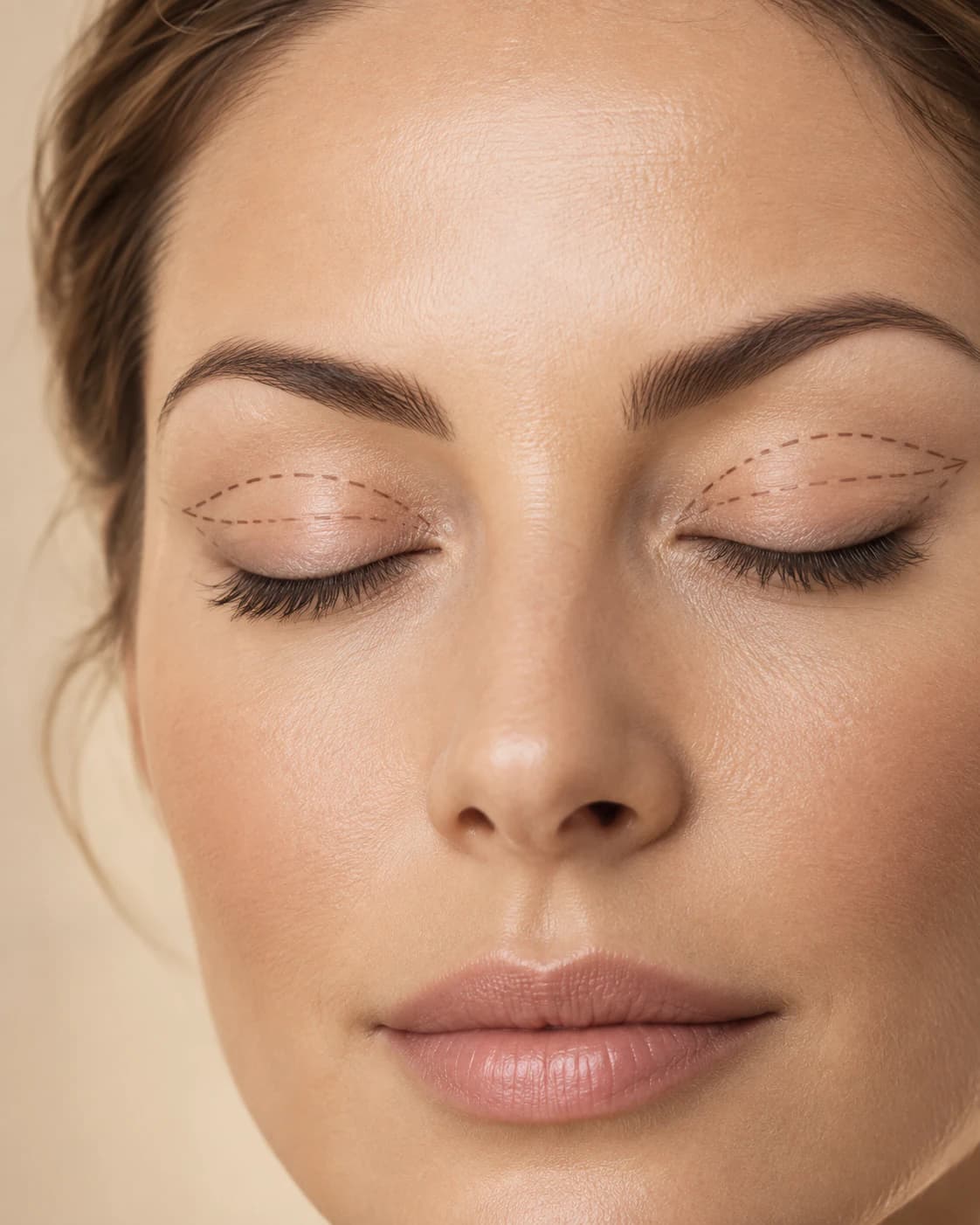
- Hospital stay
- Day case
- Recommended Turkey stay
- 5–7 days
- Initial recovery
- 5–7 days
- Final result
- 3–6 months
Blepharoplasty removes or repositions excess skin, fat and sometimes muscle of the upper or lower eyelids. It is used to treat hooded upper lids and bags beneath the eyes. It is usually a short operation, and patients travelling to Turkey for it commonly plan a stay of about a week.
Eyelid surgery is small in scale but works millimetres from the eye. The decisions that matter most are whether the problem is really in the eyelid, what the eye itself needs before surgery, and how much tissue should be removed — too little leaves little change, too much can stop the eye closing comfortably. This guide covers those decisions and the practical plan for surgery abroad.
01
Upper and Lower Blepharoplasty
| Upper blepharoplasty | Lower blepharoplasty | |
|---|---|---|
| Main concern | Hooded or heavy upper lids | Bags or puffiness beneath the eyes |
| Typical incision | In the natural crease of the upper lid | Just below the lashes, or inside the lower lid |
| What is changed | Excess skin, and sometimes fat or muscle, removed | Fat repositioned or removed; sometimes a little skin; lid support if needed |
| Visible scar | Usually hidden in the lid crease | None when the incision is inside the lid; a fine line below the lashes otherwise |
| Anaesthesia | Local or general anaesthetic | Local or general anaesthetic |
The NHS describes eyelid surgery as taking around 45 minutes to two and a half hours, with most people going home the same day.
02
What Eyelid Surgery Cannot Correct
- A low brow. When the eyebrow has dropped, removing upper-lid skin alone can pull the brow lower. A brow lift may be the better or additional operation.
- A drooping lid margin (ptosis). If the edge of the lid covers part of the pupil because the lifting muscle is weak, skin removal will not raise it; a different repair is needed.
- Dark circles from pigment or thin skin, fine crow's feet and a hollow tear trough — these may need skin treatment, fat grafting or filler rather than blepharoplasty.
- Cheek and midface sagging, which is addressed by facial lifting rather than eyelid surgery.
03
Eye Checks Before Surgery
A systematic review of upper blepharoplasty notes that many studies describe effects on the cornea, eye pressure, tear film and dry eye symptoms after surgery. Tell your surgeon about:
- dry eyes, use of lubricating drops, or eye irritation
- contact lens use and previous laser eye surgery
- glaucoma, thyroid eye disease or previous eye operations
- blood-thinning medicines such as aspirin, warfarin or apixaban
Ask whether your vision, tear production and eyelid closure will be checked before surgery, and by whom.
04
Is Eyelid Surgery Suitable for You?
- excess upper-lid skin or lower-lid bags that bother you or limit your upper field of vision
- healthy eyes, or eye conditions that are stable and known to the surgeon
- no smoking, which irritates healing eyes and slows wound healing
- realistic expectations: a rested appearance, not a different eye shape
05
What Can Change After the Examination
- a brow lift may be suggested alongside or instead of upper blepharoplasty
- ptosis may be found, changing the operation and its price
- a lower blepharoplasty may change from an incision inside the lid to one below the lashes if skin or lid laxity needs treatment
- surgery may be postponed if dry eye or another eye problem needs treatment first
06
Blepharoplasty Cost in Turkey
In September 2026, blepharoplasty packages advertised by Turkish providers were commonly around €1,500–€2,600. What a package covers depends on whether upper, lower or all four eyelids are treated and on the lower-lid technique, so confirm the scope before comparing prices. For comparison, the NHS gives a UK private price range of £2,000–£6,000. These figures are advertised observations and a published range, not quotes.
| Cost factor | Why it may change the price | What to confirm |
|---|---|---|
| Upper, lower or both | Four lids take longer than two | Which eyelids are included |
| Lower-lid technique | Fat repositioning and lid support add time | Incision site and what is done to the fat |
| Anaesthesia | Local only, sedation or general | Type of anaesthesia and whether an anaesthetist is present |
| Combined procedures | Brow lift, facelift or fat transfer | Every procedure listed separately |
| Surgeon | Plastic, oculoplastic or facial plastic surgeon | Who operates |
| Aftercare | Suture removal and wound checks before flying | Visits included |
| Travel services | Usually a week of accommodation | Nights included |
The same operation abroad
The UK and US figures are published by each country's own national body; the Türkiye range is the one recorded on this site from Turkish providers. Nothing is converted between currencies, and the US figure is a surgeon fee that excludes anaesthesia and the operating room — so the real US total is higher than shown.
| Procedure | TürkiyeAdvertised package prices | United KingdomNHS — typical private total | United StatesASPS — surgeon fee only | Continental EuropeNo published source |
|---|---|---|---|---|
| Blepharoplasty | €1,500 – €2,600 | £2,000 – £6,000 | $3,359 – $3,876Surgeon fee only — not a total$3,359 upper lid, $3,876 lower lid — shown as a range across the two. | Not published |
What each figure includes
Türkiye
€1,500 – €2,600What the figure covers
Range of prices advertised by Turkish providers
Observed on provider websites by this siteRecorded 2026-09-15
United Kingdom
£2,000 – £6,000What the figure covers
Typical total price paid privately
Not included
- Consultations
- Follow-up care
- Any further surgery
NHS (nhs.uk)Recorded 2026-09-08
United States
$3,359 – $3,876What the figure covers
Average surgeon fee only
Not included
- Anaesthesia
- Operating room / facility fees
- Other related expenses
Because those are excluded, this is a floor rather than what a patient pays. The real total is higher.
$3,359 upper lid, $3,876 lower lid — shown as a range across the two.
American Society of Plastic Surgeons (ASPS)Recorded 2026-09-08
07
What to Check in Your Eyelid Surgery Quote
- upper, lower or four-lid surgery, and the lower-lid incision
- whether fat is removed or repositioned and whether lid support is planned
- anaesthesia type and the operating surgeon
- pre-operative eye checks
- suture removal date relative to your flight
- how dry eye, lid malposition or asymmetry would be managed after you return home
- revision policy and deposit terms
08
Surgeons Offering Blepharoplasty in Turkey
These surgeons list blepharoplasty on their own website, a hospital staff page or our register. Order reflects profile completeness, not merit.


09
Choosing a Surgeon for Eyelid Surgery
Eyelid surgery in Turkey is performed by plastic surgeons, ophthalmologists with oculoplastic training and some facial plastic surgeons. Whichever specialty, look for:
- Regular eyelid surgery, including lower-lid techniques if you need them
- An assessment of the brow, lid margin and eye surface, not only the skin
- A conservative approach to skin removal, with a clear answer on how eye closure is protected
- Photographs of similar eyelids, with eyes open and gently closed, several months after surgery
10
Choosing a Hospital or Clinic for Eyelid Surgery
Most people go home the same day after eyelid surgery. When sedation or general anaesthesia is planned, an anaesthetist and a facility equipped for it are needed. For international patients, check that the hospital or clinic holds a health tourism authorisation and appears on the HealthTürkiye certified provider list.
23 hospitals and clinics list blepharoplasty.
11
Before-and-After Photos
Compare eyelid photographs taken straight on and in profile, with eyes open, looking up and gently closed, in the same lighting and without make-up. Look at scar position, the shape of the lower lid against the eye, symmetry and whether the eyes appear hollow. Results at three to six months are more informative than early photographs.

 BeforeAfter
 BeforeAfter
 BeforeAfter
12
Recovery After Blepharoplasty
| Period | What is typical | What to plan |
|---|---|---|
| First two days | Swelling, tightness, puffy and numb lids that may be hard to close fully | Cold compresses, head raised on pillows, prescribed eye drops or ointment |
| First week | Bruising; suture strips or stitches removed up to about a week after surgery | Sunglasses, no contact lenses, no eye rubbing, avoid strenuous activity and swimming |
| Around two weeks | Many people return to work, depending on the job | Bruising and redness may take several weeks to fade |
| Months one to six | Scars may look visible and feel tight for a few months before fading | Protect scars from sun; final result assessed around three to six months |
Do not drive until your surgeon confirms you can see and react normally.
13
Risks and Safety Considerations
Temporary side effects are common: swollen and numb eyelids, difficulty closing the eyes fully for a period, irritated, sensitive or watery eyes, bruising and scarring. The NHS lists occasional complications including blurred or double vision, uneven eyes, noticeable scarring and changes in eyelid sensation, and rarer serious problems such as injury to the eye muscles or the lower lid pulling away from the eye.
Published reviews give useful context, but they cannot predict your own outcome. A 2025 systematic review of lower blepharoplasty described a low complication profile and found that most functional and aesthetic complications could be resolved with conservative treatment or revision surgery, while noting that lower-lid surgery remains technically demanding. Seek urgent help for severe eye pain, sudden loss of vision or rapidly increasing swelling around the eye.
14
How Long to Stay in Turkey
Patients commonly plan around 5–7 days in Turkey after blepharoplasty, so that stitches can be removed and the eyelids checked before flying. Cabin air is dry; ask whether to use lubricating drops during the flight, and pack sunglasses for bright light and wind. Your surgeon confirms when travel is appropriate.
15
What to Send for a Preliminary Assessment
- age, medical conditions, medication (especially blood thinners) and smoking status
- eye history: dry eye, contact lenses, laser eye surgery, glaucoma, thyroid eye disease
- previous eyelid, brow or facial procedures, including fillers under the eyes
- close-up photographs of both eyes and brows, straight on and from each side, with eyes open, looking up and gently closed, in daylight and without make-up
A remote review can suggest whether the concern is in the lid, the brow or both; the plan is confirmed only after examination.
16
Eyelid Surgery in Istanbul and Other Cities
Blepharoplasty is offered in many Turkish cities; the largest number of surgeons listing it on our register practise in Istanbul.
17
Request Eyelid Surgery Options
Send your eye history and photographs to receive blepharoplasty options you can compare. A request is not a booking, and the operation is confirmed only after examination by the surgeon who will operate.
18
Frequently asked questions
What is blepharoplasty?+
Blepharoplasty is eyelid surgery that removes or repositions excess skin, muscle and fat around the eyes. Upper blepharoplasty treats hooded or heavy upper eyelids, while lower blepharoplasty addresses under-eye bags and, in some techniques, smooths the transition between the lower lid and cheek. It can make the eyes look less tired, but it does not change the shape of the eye itself. The procedure may be cosmetic, or partly functional when upper eyelid skin blocks vision. It is performed by plastic surgeons and oculoplastic surgeons, who specialise in eyelid and eye-socket surgery.
What is the difference between upper and lower blepharoplasty?+
Upper blepharoplasty removes excess upper-eyelid skin and sometimes fat through an incision hidden in the natural eyelid crease. Lower blepharoplasty targets under-eye bags, loose skin or hollowness beneath the eyes. Lower lid surgery may be done through an incision inside the eyelid, called transconjunctival, when mainly fat needs removal or repositioning, or just below the lashes when skin also needs tightening. Lower eyelid surgery generally requires more attention to eyelid support, because changes can affect lid position. Many patients have only upper or lower surgery, while others have both.
Can blepharoplasty improve vision?+
Upper blepharoplasty can improve vision when heavy upper eyelid skin hangs over the lashes and blocks the upper or side field of vision. In these cases, a visual field test may document the problem. Blepharoplasty does not correct eyesight problems such as short-sightedness, and lower blepharoplasty does not usually affect vision. A drooping upper eyelid margin caused by a weakened eyelid muscle, called ptosis, is different from excess skin and may need ptosis repair. Some patients also have brow descent. An eye and eyelid examination helps identify the true cause of hooding.
Will blepharoplasty remove dark circles and wrinkles around the eyes?+
Blepharoplasty can reduce puffiness, bags and excess skin, but it often has limited effect on dark circles and fine wrinkles. Dark circles may come from pigmentation, thin skin, visible blood vessels or hollowness beneath the eye. Crow's feet are caused largely by muscle movement and skin ageing. Lower blepharoplasty with fat repositioning may soften some shadows, while other concerns may need skin treatments, fillers, fat transfer or anti-wrinkle injections. A surgeon should identify the cause of each concern and explain what surgery can realistically change.
Who is a good candidate for eyelid surgery?+
Good candidates usually have excess upper-eyelid skin, under-eye bags or eyelid ageing that bothers them, are in good health and have realistic expectations. A careful eye history is important, including dry eye, thyroid eye disease, glaucoma, previous eye surgery, recent laser vision correction and contact lens use. Some conditions increase the risk of dryness or difficulty closing the eyes. Your surgeon may examine tear production, eyelid tone and brow position. You can compare surgeons who list blepharoplasty and request an assessment.
What are the risks of blepharoplasty?+
Blepharoplasty risks include dry or irritated eyes, temporary blurred vision, difficulty closing the eyes completely, asymmetry, visible scarring and a hollow appearance if too much fat or skin is removed. Lower eyelid surgery can cause the lower lid to pull down or turn outward, known as eyelid malposition or ectropion. Bleeding, infection and changes in eyelid shape can also occur. A rare but serious complication is bleeding behind the eye; sudden severe pain, bulging of the eye or loss of vision needs urgent medical attention. Ask how your surgeon protects eyelid support.
What is recovery like after blepharoplasty?+
Blepharoplasty is usually a day-case procedure, and many people return to routine activities or desk work within about 5–7 days. Swelling and bruising are common for one to two weeks, and the eyes may feel tight, dry or watery. Stitches, if not dissolvable, are often removed after several days. Surgeons commonly recommend cold compresses, keeping the head elevated, avoiding strenuous activity, limiting screen strain, and delaying contact lenses and eye makeup. Scars and eyelid contour continue refining over several months, with final results often seen around three to six months.
How long do blepharoplasty results last?+
Blepharoplasty results are often long-lasting, particularly after lower eyelid fat removal or repositioning, but they do not stop ageing. Upper eyelid skin can gradually loosen again, and brow descent over time may create renewed heaviness above the eyes. Lower eyelid skin and cheek support also continue to change with age. Sun exposure, smoking, genetics and weight changes can influence how long the improvement lasts. Some patients later choose a brow lift, skin treatments or a second eyelid procedure. Ask your surgeon how your brow position may affect the long-term result.
How long should I stay in Turkey after blepharoplasty?+
Patients are commonly advised to plan around 5–7 days in Turkey after blepharoplasty. This usually allows a wound check and removal of any non-dissolvable stitches before flying. Cabin air can be dry, so bring any lubricating eye drops your surgeon recommends, and wear sunglasses to protect the eyes and conceal bruising. Avoid heavy lifting and rubbing your eyes during travel. Before leaving, ask for written instructions for eye care, when to wear contact lenses again, and urgent warning signs such as severe pain or vision changes. Our flying after surgery guide covers travel planning.
What affects the cost of blepharoplasty in Turkey?+
Blepharoplasty cost in Turkey depends mainly on whether surgery is performed on the upper eyelids, lower eyelids or both, and on the technique, anaesthesia, surgeon's fee and facility. Lower eyelid surgery with fat repositioning or eyelid support procedures usually takes longer than simple upper eyelid skin removal. Combining blepharoplasty with a brow lift, facelift or fat transfer increases the total. Check whether consultation, medication, eye drops, stitch removal and follow-up are included. Our blepharoplasty cost page shows recorded price ranges.
19
Medical references
- [1]Certified health service providers (international health tourism) — HealthTürkiye — Ministry of Health / USHAŞ
- [2]Eyelid Surgery — American Society of Plastic Surgeons
- [3]Eyelid surgery — NHS
- [4]Upper Eyelid Blepharoplasty: Surgical Techniques and Results — Systematic Review and Meta-analysis — Rodrigues C et al., Aesthetic Plastic Surgery, 2023
- [5]Safety and Complications in Lower Eyelid Blepharoplasty: A Systematic Review — Gimenez AR et al., Plastic and Reconstructive Surgery Global Open, 2025
Medical disclaimer
This content is educational and does not constitute medical advice or a diagnosis. It is not a substitute for an individual assessment by an appropriately qualified healthcare professional. Risks, suitability, and outcomes vary by patient. Prices are estimates unless confirmed by a provider's written quotation. Inclusion of any doctor or facility on this site is not a guarantee of outcome. Read the full medical disclaimer.
Why Türkiye
What Türkiye offers, and how to check it
A national authorisation scheme, specialist surgeons and prices set beside those of the countries patients travel from — each with a source you can check.
A national authorisation scheme
Hospitals and clinics treating international patients must hold a Ministry of Health health-tourism authorisation and, under the 2025 regulation, must also carry complication insurance for operating-room procedures.
How providers are checked1,935 plastic surgery specialists
Plastic, reconstructive and aesthetic surgery is its own specialty in Türkiye, and every profile states the surgeon's title, what we checked and, where we hold it, where they practise.
Meet the surgeonsPrices you can compare in the open
Türkiye set against the NHS and American Society of Plastic Surgeons figures for the same operation — nothing converted between currencies, every figure dated.
Compare the figures845 hospitals and clinics, 70 cities
1,949 surgeons and 40 procedures listed, from Istanbul and Ankara to İzmir and Antalya — and a patient team to help you shortlist.
See the hospitals