Dental in Turkey
Veneers in Turkey
Compare dentists, costs, treatment options, recovery information and patient results.
Dental veneers are thin porcelain, ceramic or composite coverings bonded to the front of teeth to change their colour, shape or size. Many veneer procedures involve permanently removing some enamel, so treatment should be planned carefully after an assessment of your teeth, gums and bite.
01
What are Veneers?
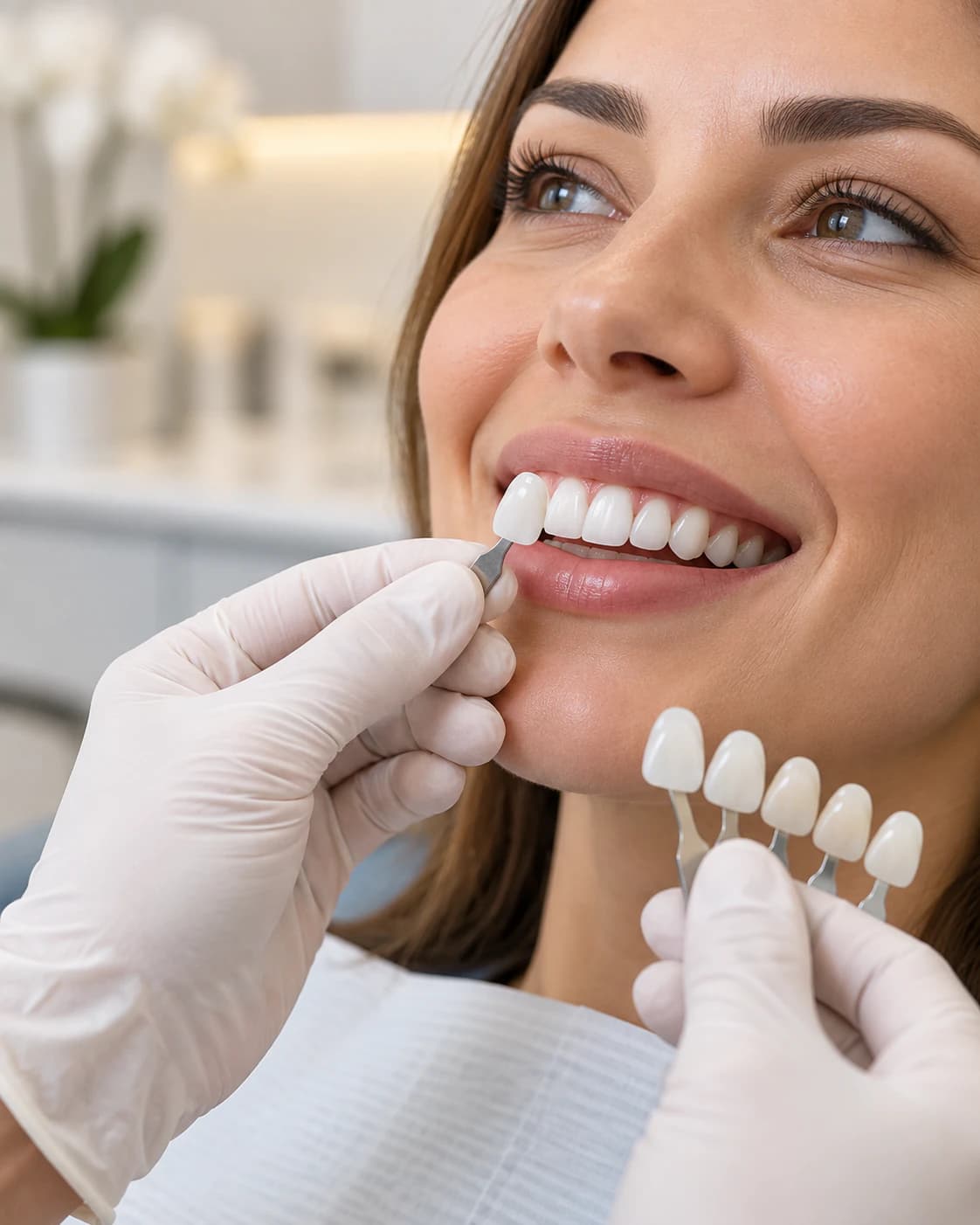
Dental veneers are thin shells of porcelain or composite resin bonded to the front surface of teeth to improve their appearance. They can address discolouration, chips, cracks, minor misalignment, gaps, and shape irregularities. Porcelain veneers usually offer good colour stability, stain resistance and durability. Composite veneers are usually more affordable and can often be placed in a single visit, but may stain, chip or wear sooner.
Why patients consider Turkey
Many dental clinics in Turkey, including in Istanbul and Antalya, offer veneers to international patients, and treatment can often be completed in about 5–7 days. Some packages use the word veneers loosely, so ask whether you will receive true veneers or full crowns, and allow enough time for adjustments rather than rushing treatment.
02
Dentists offering Veneers
03
Veneers — before and after
Published cases for this dental treatment. Where recorded, each names the dentist and facility behind it and states how long after treatment the second photograph was taken. Individual outcomes vary — no case is a prediction of your own result.

 BeforeAfter
 BeforeAfter
 BeforeAfter
04
Cost in Turkey
| City | Price range | Package includes |
|---|---|---|
| Turkey (national) | €130–€250 |
Price data last updated 15 September 2026.
Commonly included
- Consultation and shade matching
- Tooth preparation
- Temporary veneers (during fabrication)
- Custom veneer fabrication
- Bonding and fitting
- Follow-up appointment
05
Types & techniques
These are variants of the same dental treatment, not a ranking. Which one suits you is a clinical judgement your dentist makes after examination — the differences below are what that conversation is about.
Porcelain veneers
Custom-made thin porcelain shells. Good colour stability, stain resistance and durability. Usually require some removal of enamel.
E-max veneers
Made from lithium disilicate ceramic, which is strong and can look natural.
Composite veneers
Applied directly to the tooth using composite resin. Usually more affordable and often completed in one visit, but less durable than porcelain.
Ultra-thin (no-prep) veneers
Extremely thin veneers requiring minimal or no tooth reduction. Suitable for selected cases.
06
Who may be suitable
May be suitable
- Adults with discoloured, chipped, or misshapen teeth
- Patients with minor gaps or spacing issues
- Those with teeth that do not respond to whitening
- Patients with good underlying tooth structure
- Those with realistic expectations about the result
May not be suitable
- Patients with severe tooth decay or gum disease (must be treated first)
- Those who grind their teeth (bruxism) without a night guard
- Patients with very little remaining tooth enamel
- Those with severely misaligned teeth (orthodontics may be more appropriate)
Medical assessment required: Suitability can only be confirmed by a qualified clinician who has assessed you in person.
07
Recovery timeline
- Stages
- 4
- Begins
- Preparation appointment (Days 1–2)
- Final stage
- Settling (1–2 weeks)
Preparation appointment (Days 1–2)
Stage 1 of 4Teeth prepared (the amount of enamel removed depends on the case). Impressions taken. Temporary veneers placed.
Fabrication (Days 3–5)
Stage 2 of 4Veneers made in a dental laboratory. Temporary veneers worn.
Fitting appointment (Days 5–7)
Stage 3 of 4Permanent veneers bonded to teeth. Minor adjustments made. Mild sensitivity for a few days is normal.
Settling (1–2 weeks)
Stage 4 of 4Mild sensitivity resolves. Avoid very hard or staining foods initially.
Typical stages, not a schedule you are held to. Healing varies with anatomy, technique and general health, and your dentist's own aftercare instructions override anything here.
08
Risks & complications
| Risk | What it means |
|---|---|
| Your individual risks | All dental procedures carry risks. Discuss the risks specific to your circumstances with your dentist. |
| Tooth sensitivity (usually temporary) | Mild sensitivity after fitting is common and usually resolves within 1–2 weeks. |
| Veneer fracture or debonding | Veneers can chip, fracture or come loose. Grinding and habits such as biting nails, pens or ice increase the risk. |
| Colour mismatch with adjacent teeth | Matching a small number of veneers to natural teeth can be challenging. |
| Irreversible tooth preparation (enamel removal is permanent) | The amount removed depends on the material, tooth position and the dentist's approach. Heavy preparation can increase the risk of nerve damage or later root canal treatment. |
| Gum irritation | Veneers that are too thick or poorly shaped can make cleaning difficult and irritate the gums. |
| Need for repair or replacement over time | Veneers are not permanent. Longevity depends on the material, bonding, bite, grinding and oral hygiene. |
What applies to every procedure: symptoms that need help now, flying after surgery and insurance.
09
Hospitals & clinics offering Veneers
10
Frequently asked questions
What are dental veneers?+
Dental veneers are thin coverings bonded to the front surfaces of teeth to change their colour, shape, size or appearance. They may be made from porcelain or other ceramic materials in a laboratory, or from composite resin applied directly by the dentist. Veneers can improve discoloured teeth, chips, small gaps, worn edges and some minor irregularities. They do not correct serious bite problems, gum disease or significant misalignment. Because many veneer procedures involve removing some enamel, the treatment should be planned carefully.
What is the difference between porcelain and composite veneers?+
Porcelain veneers are usually made in a laboratory and can offer good colour stability, stain resistance and durability. Composite veneers are made from tooth-coloured resin that is shaped directly on the teeth, often in fewer visits and at lower cost. Composite can be repaired more easily but may stain, chip or wear sooner. Porcelain may require more tooth preparation, depending on the case. The best material depends on your teeth, bite, grinding habits, budget, appearance goals and maintenance expectations.
Do veneers damage teeth?+
Veneers can require removal of some enamel from the front of the teeth, and that change is usually permanent. The amount depends on the material, tooth position, colour change and the dentist's approach. Some minimal-preparation or no-preparation veneers remove little or no enamel, but they are not suitable for every case. More aggressive preparation can increase the risk of sensitivity, nerve problems and weakened teeth. Ask exactly how much tooth structure will be removed and whether a mock-up or digital smile design will guide preparation.
What is the difference between veneers and crowns?+
Veneers mainly cover the front surface of a tooth, while crowns cover the entire visible tooth. Veneers are often more conservative for healthy teeth with cosmetic concerns, whereas crowns may be more appropriate for teeth weakened by large fillings, fractures or root canal treatment. Some treatment packages use the word veneers loosely, so ask whether you will receive true veneers or full crowns. The distinction affects how much tooth is removed and future treatment needs. Compare them in our dental crowns guide.
Who is a good candidate for veneers?+
Good candidates usually have healthy teeth and gums and cosmetic concerns such as discolouration, chips, small gaps, worn edges or uneven shapes. Active decay, gum disease and some bite problems should be treated first. People who grind or clench their teeth may need extra planning and a night guard. Whitening, bonding or orthodontic treatment may be more conservative options for some patients. A dentist should assess your smile, bite and oral health before recommending veneers. You can find dentists who list veneers.
How many veneers do I need?+
The number of veneers depends on your smile, the teeth visible when you talk and smile, your goals and the condition of each tooth. Some patients need only one or a few veneers to correct specific teeth, while others choose more to create a consistent colour and shape across the smile. Matching a small number of veneers to natural teeth can be challenging. A dentist should explain why each tooth is included and whether some teeth could be treated with whitening or bonding instead.
What happens during veneer treatment in Turkey?+
Veneer treatment usually begins with an examination, X-rays and discussion of your goals. Many dentists create a digital smile design or trial mock-up so you can preview the proposed shape. Any decay or gum problems should be treated first. The teeth may then be prepared and scanned, or impressions taken, and temporary veneers may be fitted while the final veneers are made. At the fitting appointment, colour, shape, bite and fit are checked before bonding. Allow enough time in Turkey for adjustments rather than rushing treatment.
What are the risks of veneers?+
Veneer risks include tooth sensitivity, chipping, fracture, debonding, gum irritation, colour mismatch, bite problems and decay at the edges. Veneers that are too thick or poorly shaped can look bulky and make cleaning difficult. Heavy tooth preparation can increase the risk of nerve damage or later need for root canal treatment. Some patients are unhappy with an overly white or uniform appearance. Ask to see the planned result before final bonding and clarify what repairs or remakes are included.
How long do veneers last and how do I care for them?+
Veneers can last many years, but they are not permanent and may need repair or replacement over time. Longevity depends on the material, bonding quality, tooth preparation, bite, grinding, oral hygiene and habits such as biting nails, pens or ice. Porcelain generally resists staining better than composite. Brush and clean between teeth daily, attend regular check-ups and wear a night guard if recommended. Contact a dentist promptly if a veneer chips, feels loose or causes sensitivity.
What affects the cost of veneers in Turkey?+
Veneer cost in Turkey depends on the number of teeth, material, laboratory work, digital smile design, temporary veneers, X-rays, treatment of decay or gum problems and whether whitening or gum contouring is included. Composite veneers are usually priced differently from porcelain or ceramic veneers. Ask whether the quote is for true veneers or crowns, and whether repairs, replacements and follow-up are included. Compare itemised plans rather than package names. See our veneers cost page for recorded ranges.
Medical disclaimer
This content is educational and does not constitute medical advice or a diagnosis. It is not a substitute for an individual assessment by an appropriately qualified healthcare professional. Risks, suitability, and outcomes vary by patient. Prices are estimates unless confirmed by a provider's written quotation. Inclusion of any doctor or facility on this site is not a guarantee of outcome. Read the full medical disclaimer.
Why Türkiye
What Türkiye offers, and how to check it
A national authorisation scheme, specialist surgeons and prices set beside those of the countries patients travel from — each with a source you can check.
A national authorisation scheme
Hospitals and clinics treating international patients must hold a Ministry of Health health-tourism authorisation and, under the 2025 regulation, must also carry complication insurance for operating-room procedures.
How providers are checked1,935 plastic surgery specialists
Plastic, reconstructive and aesthetic surgery is its own specialty in Türkiye, and every profile states the surgeon's title, what we checked and, where we hold it, where they practise.
Meet the surgeonsPrices you can compare in the open
Türkiye set against the NHS and American Society of Plastic Surgeons figures for the same operation — nothing converted between currencies, every figure dated.
Compare the figures845 hospitals and clinics, 70 cities
1,949 surgeons and 40 procedures listed, from Istanbul and Ankara to İzmir and Antalya — and a patient team to help you shortlist.
See the hospitals