Dental in Turkey
Dental Crowns in Turkey
Compare dentists, costs, treatment options, recovery information and patient results.
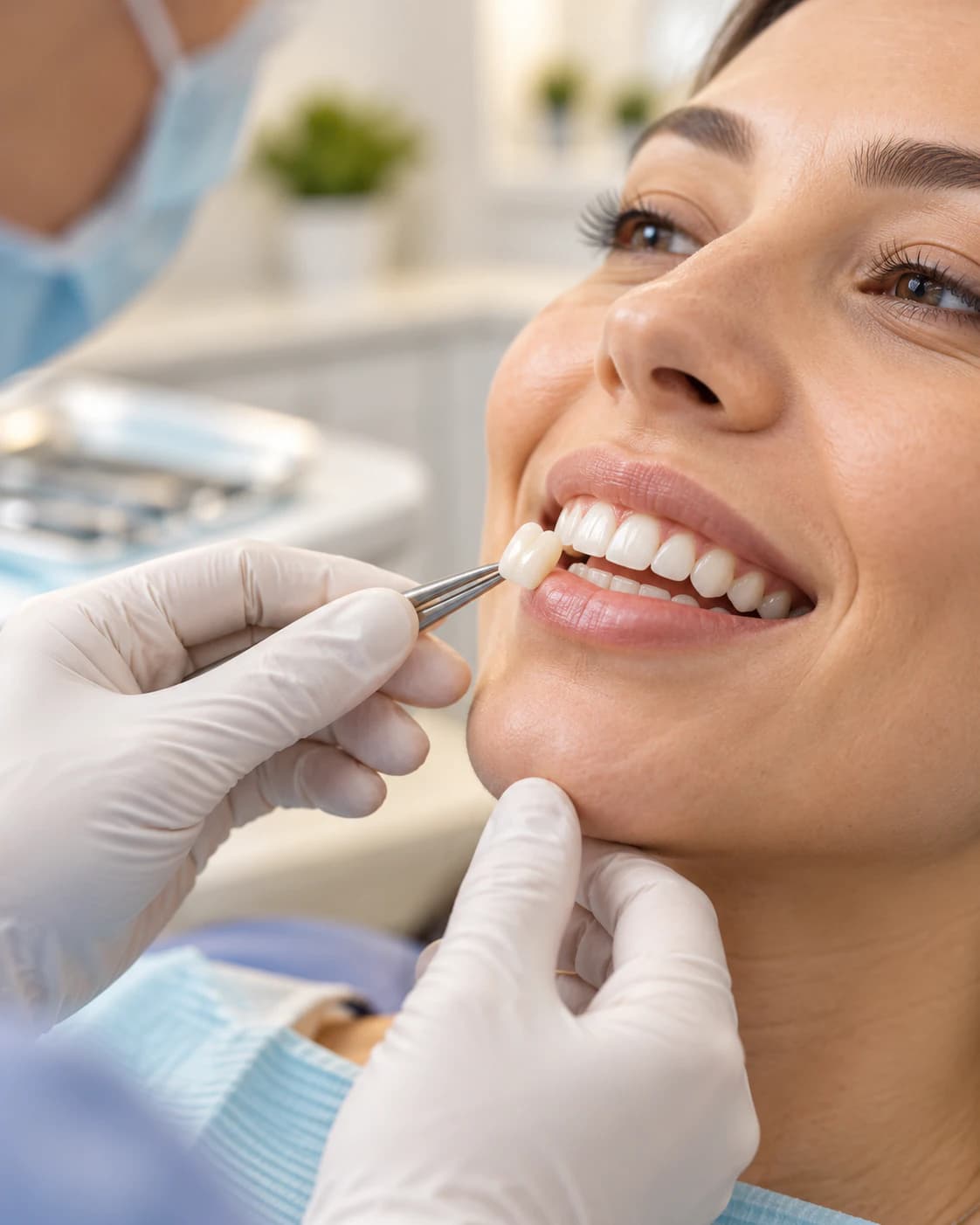
A dental crown is a cap that covers the visible part of a damaged, decayed or weakened tooth to restore its shape, strength and appearance. Crowns can be made from zirconia, ceramic, metal or porcelain fused to metal, and fitting one on a natural tooth usually means permanently removing some tooth structure.
01
What are Dental Crowns?
A dental crown is a cap placed over a damaged, decayed, or weakened tooth to restore its shape, size, strength, and appearance. Crowns are also used to cover dental implants, protect teeth after root canal treatment, and as part of bridge restorations. Zirconia and E-max (lithium disilicate) crowns are metal-free and tooth-coloured and are widely used in cosmetic dentistry. Older porcelain-fused-to-metal crowns may show a grey line at the gum over time.
Why patients consider Turkey
Many dental clinics in Turkey offer crowns to international patients, and treatment is often planned over about 5–7 days. Multiple crowns or root canal treatment may need more appointments, so allow extra time, and ask for your X-rays, the materials used and the guarantee terms in writing before you leave.
02
Dentists offering Dental Crowns
03
Cost in Turkey
| City | Price range | Package includes |
|---|---|---|
| Turkey (national) | €100–€200 |
Price data last updated 15 September 2026.
What affects price
Dental crown costs in Turkey vary with the material (zirconia, E-max or porcelain fused to metal), the number of crowns and any treatment needed first. Zirconia and E-max crowns are usually at the higher end of the price range.
Commonly included
- Consultation and shade matching
- Tooth preparation
- Temporary crown
- Custom crown fabrication
- Crown fitting and cementation
- Follow-up appointment
04
Types & techniques
These are variants of the same dental treatment, not a ranking. Which one suits you is a clinical judgement your dentist makes after examination — the differences below are what that conversation is about.
Zirconia crowns
Made from zirconium dioxide. Strong, tooth-coloured and metal-free. Often used for back teeth and bridges.
E-max (lithium disilicate) crowns
Good aesthetics and translucency. Often used for front teeth, where appearance matters most.
Porcelain-fused-to-metal (PFM)
Traditional option with metal substructure and porcelain overlay. Strong but may show a grey line at the gum over time.
Full metal crowns
Gold or other metal alloys. Durable but not tooth-coloured. Used mainly for back teeth, where appearance matters less.
05
Who may be suitable
May be suitable
- Patients with significantly damaged, decayed, or cracked teeth
- Those who have had root canal treatment (the tooth may need protection)
- Patients with dental implants requiring a crown
- Those with teeth too damaged for veneers
- Patients with good oral hygiene
May not be suitable
- Patients with active gum disease (must be treated first)
- Those with insufficient tooth structure remaining
- Patients with severe bruxism without a night guard
Medical assessment required: Suitability can only be confirmed by a qualified clinician who has assessed you in person.
06
Recovery timeline
- Stages
- 3
- Begins
- Preparation (Days 1–2)
- Final stage
- Fitting (Days 5–7)
Preparation (Days 1–2)
Stage 1 of 3Tooth prepared and shaped. Impressions taken. Temporary crown placed.
Fabrication (Days 3–5)
Stage 2 of 3Permanent crown made in a dental laboratory.
Fitting (Days 5–7)
Stage 3 of 3Permanent crown cemented. Minor adjustments made. Mild sensitivity for a few days is normal.
Typical stages, not a schedule you are held to. Healing varies with anatomy, technique and general health, and your dentist's own aftercare instructions override anything here.
07
Risks & complications
| Risk | What it means |
|---|---|
| Your individual risks | All dental procedures carry risks. Discuss the risks specific to your circumstances with your dentist. |
| Tooth sensitivity (usually temporary) | Mild sensitivity for a few days after fitting is common. |
| Crown fracture or debonding | A crown can chip, fracture, loosen or fall off. Teeth grinding increases the risk. |
| Gum irritation | Poorly fitting crowns can trap plaque and contribute to gum disease. |
| Colour mismatch | The crown may not match neighbouring teeth; colour and shape are checked before it is cemented. |
| Need for root canal treatment if tooth becomes infected | If the tooth nerve becomes inflamed or damaged, root canal treatment may be needed later. |
| Need for replacement over time | Crowns can last many years but may need replacing if they chip, loosen, fracture or leak. |
What applies to every procedure: symptoms that need help now, flying after surgery and insurance.
08
Hospitals & clinics offering Dental Crowns
09
Frequently asked questions
What is a dental crown?+
A dental crown is a cap that covers the visible part of a tooth to restore its shape, strength, function or appearance. Crowns are commonly used for teeth weakened by large fillings, fractures or decay, teeth that have had root canal treatment, and dental implants. They can be made from ceramic, zirconia, metal or porcelain fused to metal. Fitting a crown on a natural tooth usually requires removing some tooth structure so the crown can fit without making the tooth too bulky.
When do I need a crown instead of a filling?+
A crown may be recommended when a tooth has lost too much structure for a filling to support it reliably, such as after a large fracture, extensive decay or root canal treatment in a back tooth. Smaller areas of damage may be treated with a filling or bonding, while an onlay can cover part of the chewing surface and preserve more natural tooth. The best option depends on how much healthy tooth remains, bite forces and cosmetic needs. Ask whether a more conservative treatment is possible.
What are dental crowns made from?+
Dental crowns may be made from zirconia, lithium disilicate ceramic, porcelain fused to metal, all-metal alloys or gold. Zirconia is known for strength and is often used for back teeth or bridges. Lithium disilicate can offer good aesthetics and is often used where appearance matters. Porcelain fused to metal combines a metal base with a tooth-coloured outer layer. Metal crowns are durable but not tooth-coloured. The choice depends on tooth position, bite, grinding habits, appearance and the amount of tooth available.
Do dental crowns damage natural teeth?+
Crowns require permanent removal of some natural tooth structure, and the amount depends on the crown material and tooth condition. For a damaged tooth, this can be an appropriate way to protect what remains. For healthy teeth, extensive preparation purely for cosmetic reasons can increase the risk of sensitivity, nerve inflammation and future root canal treatment. Ask how much tooth will be removed and whether less invasive options such as whitening, bonding, orthodontics or veneers are suitable. Compare them in our veneers guide.
What happens during dental crown treatment?+
Dental crown treatment usually starts with an examination, X-rays and treatment of any decay or infection. The tooth is shaped, then scanned or an impression is taken so the crown can be made. A temporary crown may protect the tooth while the permanent crown is produced, although some clinics make certain crowns on site in the same visit. At the fitting appointment, colour, shape, contacts and bite are checked before the crown is cemented or bonded. Multiple crowns may require several visits over several days.
What are the risks of dental crowns?+
Dental crown risks include tooth sensitivity, discomfort, crown loosening or falling off, chipping or fracture, gum irritation, decay at the edges of the crown and bite problems. If the tooth nerve becomes inflamed or damaged, root canal treatment may be needed later. Poorly fitting crowns can trap plaque and contribute to gum disease. Teeth grinding can increase wear or fracture risk. Ask how the fit and bite will be checked and what happens if the crown becomes loose after you return home.
How long do dental crowns last?+
Dental crowns can last many years, but lifespan varies with the material, tooth condition, bite forces, grinding, oral hygiene, diet and regular dental care. Decay can still develop where the crown meets the natural tooth, and gum recession can expose crown margins over time. A crown may need replacement if it chips, loosens, fractures or leaks. Wearing a night guard can help if you grind your teeth. Brushing, cleaning between teeth and regular check-ups help protect both the crown and the tooth underneath.
Are crowns used for a Hollywood smile?+
Crowns are sometimes used in smile makeovers, but they are not always the most conservative option. Crowns cover the whole tooth and often require more preparation than veneers, which cover mainly the front surface. They may be appropriate when teeth are heavily damaged, heavily filled or significantly misshapen. For healthy teeth, the benefits of full-coverage crowns should be weighed carefully against the permanent loss of tooth structure. Ask which teeth need crowns and why. Learn more about a Hollywood smile makeover.
What should I plan when getting crowns in Turkey?+
Plan enough time in Turkey for assessment, any preparatory treatment, temporary crowns, fitting and bite adjustment. Multiple crowns or treatment involving root canals may need more appointments than expected. Before returning home, ask for copies of X-rays, the materials used, laboratory details if available and a written list of treated teeth. Confirm what guarantee applies and whether you would need to return to Turkey for repairs. Our questions before paying worksheet helps you compare dental treatment quotes.
What affects the cost of dental crowns in Turkey?+
Dental crown cost in Turkey depends on the number of crowns, material, laboratory work, tooth preparation, X-rays or scans, temporary crowns and whether root canal treatment, core build-ups, extractions or gum treatment are needed first. Crowns on implants may require abutments and additional components. Quotes can also differ in whether accommodation, transfers, follow-up and repairs are included. Ask for an itemised written treatment plan tooth by tooth. See our dental crown cost page for recorded ranges.
Medical disclaimer
This content is educational and does not constitute medical advice or a diagnosis. It is not a substitute for an individual assessment by an appropriately qualified healthcare professional. Risks, suitability, and outcomes vary by patient. Prices are estimates unless confirmed by a provider's written quotation. Inclusion of any doctor or facility on this site is not a guarantee of outcome. Read the full medical disclaimer.
Why Türkiye
What Türkiye offers, and how to check it
A national authorisation scheme, specialist surgeons and prices set beside those of the countries patients travel from — each with a source you can check.
A national authorisation scheme
Hospitals and clinics treating international patients must hold a Ministry of Health health-tourism authorisation and, under the 2025 regulation, must also carry complication insurance for operating-room procedures.
How providers are checked1,935 plastic surgery specialists
Plastic, reconstructive and aesthetic surgery is its own specialty in Türkiye, and every profile states the surgeon's title, what we checked and, where we hold it, where they practise.
Meet the surgeonsPrices you can compare in the open
Türkiye set against the NHS and American Society of Plastic Surgeons figures for the same operation — nothing converted between currencies, every figure dated.
Compare the figures845 hospitals and clinics, 70 cities
1,949 surgeons and 40 procedures listed, from Istanbul and Ankara to İzmir and Antalya — and a patient team to help you shortlist.
See the hospitals