Plastic & Cosmetic Surgery in Turkey
Buttock Implants in Turkey
Compare surgeons, costs, treatment options, recovery information and patient results.
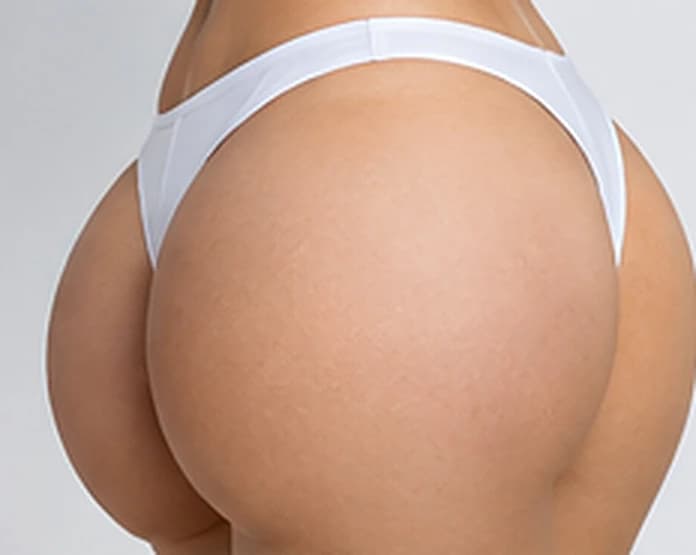
Buttock implants add volume using solid silicone implants placed within the gluteal muscle, beneath it, or under the fascia that covers it. They are an option where there is not enough body fat for a fat-transfer approach, but carry a comparatively high rate of wound and implant complications.
- Duration
- Typically 2–3 hours
- Anaesthesia
- General anaesthesia
- Hospital stay
- Usually one night
- Recommended Turkey stay
- Typically around 14 days before flying
- Initial recovery
- About 2–4 weeks, with sitting restrictions during that period
- Final result
- Settles over roughly 6 months
What are Buttock Implants?
Where someone wants increased buttock volume but lacks sufficient donor fat for grafting, solid silicone implants are the alternative. These are firm elastomer implants, different from breast implants, placed through an incision usually in the crease between the buttocks. The anatomy makes this a demanding operation. The incision sits in an area that is difficult to keep clean and under pressure whenever you sit, and the implant pocket is within or under a large, mobile muscle. Rates of wound separation, infection and implant-related problems are meaningfully higher than for many other implant procedures. Recovery restrictions are significant — sitting directly on the buttocks is typically limited for a period.
Cost in Turkey
What affects price
Price varies with implant type and size, placement technique, whether fat grafting is combined, and surgeon experience.
Types & techniques
These are variants of the same operation, not a ranking. Which one suits you is a surgical judgement made after examination — the differences below are what that conversation is about.
Intramuscular placement
The implant is placed within the gluteal muscle, which gives better soft-tissue cover but is technically demanding.
Submuscular placement
The implant sits beneath the muscle.
Subfascial placement
Placement under the fascial layer above the muscle.
Combined implant and fat grafting
An implant provides central projection while grafted fat softens the transitions, where donor fat is available.
Who may be suitable
May be suitable
- People wanting increased buttock volume who lack sufficient donor fat for grafting
- Those in good general health with realistic expectations
- People able to comply with sitting and activity restrictions during recovery
- Non-smokers, or those willing to stop before and after surgery
May not be suitable
- People with adequate donor fat, for whom fat grafting is usually preferred
- Those unable to follow post-operative restrictions
- People with active infection or skin problems in the area
- Those with uncontrolled medical conditions
Medical assessment required: Suitability can only be confirmed by a qualified surgeon who has examined you in person and reviewed your medical history.
Recovery timeline
- Stages
- 4
- Begins
- First week
- Final stage
- 6 months
First week
Stage 1 of 4Significant discomfort. Sitting directly on the buttocks is typically avoided; lying prone or on the side is usual.
Weeks 2–4
Stage 2 of 4Gradual, staged return to sitting as directed. Walking encouraged; strenuous activity avoided.
Weeks 6–8
Stage 3 of 4Most normal activity resumed as advised.
6 months
Stage 4 of 4Swelling resolves and the final contour settles.
Typical stages, not a schedule you are held to. Healing varies with anatomy, technique and general health, and your surgeon's own aftercare instructions override anything here.
Limitations
What it cannot do, and where expectations often run ahead.
Implants add central projection. They do not reshape the hips or reduce fat elsewhere, and they do not lift sagging skin.
Scarring
Where marks are left, and how they typically settle.
The incision is usually placed in the crease between the buttocks. It is hidden but sits in an area prone to healing difficulty.
Risks & complications
| Risk | What it means |
|---|---|
| Bleeding and haematoma | A collection of blood under the skin, occasionally needing a further procedure to drain it. |
| Infection | Usually treated with antibiotics; may require surgical washout. |
| Anaesthetic complications | Risks specific to the anaesthetic used, which the anaesthetist should discuss with you separately. |
| Unsatisfactory aesthetic result | Asymmetry, over- or under-correction, or a result that does not match expectations. May require revision surgery. |
| Wound separation | The incision sits in the natal cleft, an area under tension and difficult to keep clean. Wound breakdown is comparatively common. |
| Implant infection | May require removal of the implant. |
| Implant malposition, rotation or migration | The implant can shift within its pocket, causing asymmetry or a visible edge. |
| Capsular contracture | Tightening of scar tissue around the implant causing firmness or distortion. |
| Sciatic nerve irritation | Pressure or injury affecting the nerve, causing pain or altered sensation in the leg. |
| Implant palpability or visibility | The implant edge may be felt or seen, particularly in thinner people. |
What applies to every procedure: symptoms that need help now, flying after surgery and insurance.
Alternatives
Fat grafting to the buttocks uses your own tissue and avoids implant-specific risks, but requires adequate donor fat and carries its own serious risks. Non-surgical options achieve very little in this area.
Frequently asked questions
What are buttock implants?+
Buttock implants, used in gluteal augmentation, are soft but solid silicone devices placed in the buttocks to add volume and projection. Unlike most breast implants, they are generally not filled with gel or saline, so they do not leak in the same way. The surgeon typically inserts them through an incision in the crease between the buttocks or, in some techniques, in the lower buttock fold. Implant size and shape are chosen according to the patient's frame, buttock width, tissue thickness and goals. The procedure is intended to increase size, not lift loose skin.
Are buttock implants or a BBL better?+
Neither option is better for everyone; they suit different body types and goals. Buttock implants may suit slim patients who do not have enough fat for grafting and want a more predictable volume. A Brazilian butt lift uses the patient's own fat and also allows the waist and lower back to be contoured with liposuction. Implants carry device-related risks and may need removal or replacement, while fat grafting has its own serious safety considerations and some volume is reabsorbed. Compare both options in our BBL guide.
Where are buttock implants placed?+
Buttock implants are commonly placed within the gluteal muscle, beneath the muscle, or under the fascia that covers the muscle. Placement affects how natural the implant looks and feels, the risk of visible edges, implant movement and discomfort during recovery. Intramuscular placement is widely used because muscle provides coverage, while other planes may be chosen for particular anatomy or surgeon preference. The surgeon must consider nearby structures, including the sciatic nerve. Ask why a particular plane and incision are recommended for your body.
Who is a good candidate for buttock implants?+
Good candidates are generally healthy, at a stable weight, and want more buttock volume or projection but have too little spare fat for a BBL. Enough tissue is still needed to cover the implant. Buttock implants do not correct significant loose skin, cellulite or drooping after weight loss, which may need a buttock lift or lower body lift. Smoking, active skin infections and poorly controlled medical conditions increase complication risk. A surgeon should assess your buttock shape, skin, muscle and hip proportions before recommending implants.
What are the risks of buttock implants?+
Buttock implant risks include infection, wound healing problems at the incision, fluid collection, bleeding, implant shifting or rotation, visible or palpable edges, asymmetry and capsular contracture, where scar tissue tightens around the implant. Pressure on or irritation of the sciatic nerve can cause pain or numbness. Some complications may require implant removal, replacement or further surgery. Because the incision is often near the buttock crease, hygiene and wound care are particularly important. Ask your surgeon how often they perform the procedure and how complications are managed.
What is recovery like after buttock implants?+
Recovery after buttock implants is often more demanding than after many body-contouring procedures, largely because of sitting restrictions. Most patients stay one night in hospital and need about two to four weeks with limited direct sitting, as advised by the surgeon. Sleeping on the front or side, wearing compression garments, keeping the incision clean and walking regularly are common instructions. Pain and tightness are expected at first, especially with implants placed in muscle. Heavy exercise is resumed gradually, and the final shape usually settles over about six months.
Do buttock implants last forever?+
Buttock implants are not guaranteed to last for life. Solid silicone implants do not usually rupture and leak like gel implants, but they can shift, rotate, cause capsular contracture, become visible or develop problems requiring removal or replacement. Ageing, weight changes and changes in muscle and skin can also alter how the buttocks look over time. Keep a record of the implant manufacturer, model, size and placement so future surgeons know what was used. Ask your surgeon about long-term follow-up and what would happen if an implant needed removal.
How long should I stay in Turkey after buttock implants?+
Patients are commonly advised to plan around 14 days in Turkey after buttock implants. This allows wound checks near the buttock crease, monitoring for fluid collection or infection, and advice on sitting before flying. Long flights may be difficult because of sitting restrictions and increase blood clot risk. Ask your surgeon how you should sit during travel, whether you need compression stockings or other precautions, and how often to walk. Take your implant card, operation notes and written wound-care instructions home. Read our flying after surgery guide.
How do I choose a surgeon for buttock implants in Turkey?+
Choose a qualified plastic surgeon who regularly performs gluteal implant surgery and can explain implant selection, placement and complication management. Ask how many buttock implant procedures they perform, which incision and plane they use, how they reduce infection and nerve risk, and how they would manage implant displacement. Review before-and-after photos of patients with similar body shapes, including side views. Confirm where surgery takes place and how follow-up works after you return home. Our guide to choosing a surgeon lists what to check.
What affects the cost of buttock implants in Turkey?+
Buttock implant cost in Turkey depends on the implant brand, size and shape, the placement technique, operating time, anaesthesia, hospital stay and surgeon's fee. Additional liposuction or fat grafting to refine the shape will change the total. Pre-operative tests, compression garments, cushions, medication, drains, follow-up visits and accommodation may not be included. Ask which implant manufacturer is used and how removal or replacement would be charged if complications occur. Request a buttock implant consultation for an individual quote.
Medical disclaimer
This content is educational and does not constitute medical advice or a diagnosis. It is not a substitute for an individual assessment by an appropriately qualified healthcare professional. Risks, suitability, and outcomes vary by patient. Prices are estimates unless confirmed by a provider's written quotation. Inclusion of any doctor or facility on this site is not a guarantee of outcome. Read the full medical disclaimer.
Why Türkiye
What Türkiye offers, and how to check it
A national authorisation scheme, specialist surgeons and prices set beside those of the countries patients travel from — each with a source you can check.
A national authorisation scheme
Hospitals and clinics treating international patients must hold a Ministry of Health health-tourism authorisation and, under the 2025 regulation, must also carry complication insurance for operating-room procedures.
How providers are checked1,935 plastic surgery specialists
Plastic, reconstructive and aesthetic surgery is its own specialty in Türkiye, and every profile states the surgeon's title, what we checked and, where we hold it, where they practise.
Meet the surgeonsPrices you can compare in the open
Türkiye set against the NHS and American Society of Plastic Surgeons figures for the same operation — nothing converted between currencies, every figure dated.
Compare the figures845 hospitals and clinics, 70 cities
1,949 surgeons and 40 procedures listed, from Istanbul and Ankara to İzmir and Antalya — and a patient team to help you shortlist.
See the hospitals