Bariatric / Weight-Loss Procedures in Turkey
Gastric Sleeve in Turkey
Compare surgeons, costs, treatment options, recovery information and patient results.
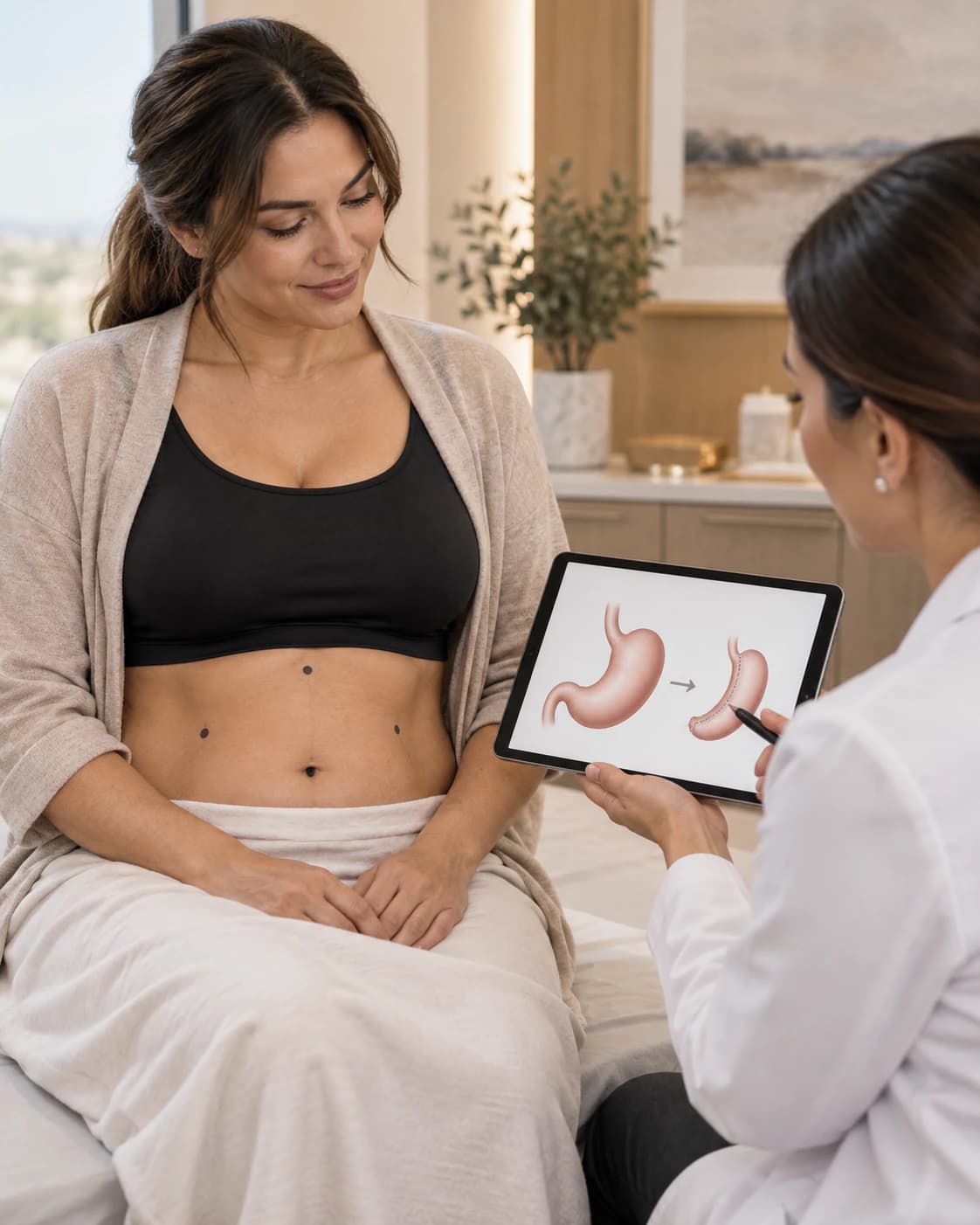
Gastric sleeve surgery (sleeve gastrectomy) removes roughly 75–80% of the stomach to restrict food intake and reduce production of a hunger hormone. It is performed laparoscopically under general anaesthesia, usually takes about 1–2 hours, and most patients stay in hospital for 1–3 nights.
- Duration
- 1–2 hours (laparoscopic)
- Anaesthesia
- General anaesthesia
- Hospital stay
- 1–3 nights
- Recommended Turkey stay
- 7–10 days in Turkey
What is Gastric Sleeve?
Sleeve gastrectomy is a laparoscopic weight-loss operation that permanently removes a large portion of the stomach, leaving a narrow ‘sleeve’, which restricts food volume and reduces production of the hunger hormone ghrelin.
Cost in Turkey
| City | Price range | Package includes |
|---|---|---|
| Istanbul | €2,200–€3,500 |
Price data last updated 15 September 2026.
Who may be suitable
May be suitable
- Patients who meet recognised BMI and health-condition (comorbidity) criteria for bariatric surgery, as assessed by a doctor
- Patients who have not achieved sustained weight loss through non-surgical means
May not be suitable
- Patients who are not medically cleared for major abdominal surgery
- Patients unwilling or unable to commit to permanent dietary changes after surgery
Medical assessment required: A full medical, nutritional and often psychological assessment is needed before a bariatric surgeon can confirm that surgery is suitable for you. This decision should not be made on the basis of advertising alone.
Recovery timeline
- Stages
- 4
- Begins
- Days 1–3
- Final stage
- Months 12–18
Days 1–3
Stage 1 of 4Hospital stay; liquid diet begins.
Weeks 1–2
Stage 2 of 4Progression from liquids to purees; most patients fly home once cleared by the surgical team.
Weeks 2–4
Stage 3 of 4Soft foods introduced gradually.
Months 12–18
Stage 4 of 4Weight loss usually slows and levels off around this time; the total amount varies substantially between individuals.
Typical stages, not a schedule you are held to. Healing varies with anatomy, technique and general health, and your surgeon's own aftercare instructions override anything here.
Risks & complications
| Risk | What it means |
|---|---|
| Leak at the staple line | A serious but uncommon complication requiring prompt medical attention. |
| Nutritional deficiency | Long-term vitamin and mineral supplementation is generally required. |
| Acid reflux (GERD) | Can develop or worsen after sleeve gastrectomy in some patients. |
| Blood clots | A risk with any major abdominal surgery; reduced with early mobilisation and preventive measures. |
When to seek urgent medical care
What applies to every procedure: symptoms that need help now, flying after surgery and insurance.
Frequently asked questions
What is gastric sleeve surgery?+
Gastric sleeve surgery, also called sleeve gastrectomy, is a weight-loss operation in which a large part of the stomach is removed, leaving a narrow, tube-shaped stomach. It is usually performed laparoscopically through several small incisions. The smaller stomach limits how much food can be eaten at once, and the operation also affects hormones involved in hunger and blood sugar control. The part of the stomach removed cannot be restored, so the operation is permanent. Long-term success depends on dietary changes, follow-up and lifelong nutritional care.
Who is eligible for gastric sleeve surgery?+
Eligibility depends on body mass index, obesity-related health conditions, previous weight-management attempts and overall surgical risk. Recent international guidelines from ASMBS and IFSO recommend considering metabolic and bariatric surgery for people with a BMI of 35 or more, and considering it for some people with a BMI of 30–34.9 who have metabolic disease. Different countries and hospitals may use different criteria, and thresholds can be lower for some Asian populations. A bariatric team should assess your medical history, eating patterns, mental health and readiness for long-term lifestyle changes.
How much weight can I expect to lose after a gastric sleeve?+
Weight loss after a gastric sleeve varies widely and cannot be guaranteed. Many patients lose a substantial amount of weight during the first one to two years, but the result depends on starting weight, health conditions, eating habits, physical activity, medication, follow-up and individual metabolism. Weight regain can occur over time, especially if old eating patterns return. Improvement in conditions such as type 2 diabetes, high blood pressure or sleep apnoea may occur in some patients. Ask your bariatric team to explain realistic expectations for you.
Is a gastric sleeve or gastric bypass better?+
Neither operation is best for everyone. A gastric sleeve removes part of the stomach without rerouting the intestine, while a gastric bypass creates a small stomach pouch and bypasses part of the intestine. A bypass may be preferred for some patients with severe acid reflux or certain metabolic conditions, while a sleeve may suit others because it is technically simpler and avoids intestinal rerouting. A sleeve can cause or worsen reflux in some patients. Both operations require lifelong nutritional follow-up. The choice should be made with a bariatric team after full assessment.
What are the risks of gastric sleeve surgery?+
Gastric sleeve risks include bleeding, infection, blood clots and a leak from the staple line, which is a serious complication requiring urgent treatment. Other risks include narrowing of the sleeve, nausea, dehydration, new or worsening acid reflux, gallstones during rapid weight loss, nutritional deficiencies and weight regain. Long-term reflux may need investigation, and some teams recommend endoscopic surveillance. Warning signs such as fever, rapid heartbeat, worsening abdominal pain, shortness of breath or inability to keep fluids down need immediate medical attention.
What diet will I follow after gastric sleeve surgery?+
After gastric sleeve surgery, patients usually follow a staged diet that moves gradually from clear liquids to full liquids, pureed foods, soft foods and then regular textures over several weeks. Protein is prioritised to support healing and preserve muscle. Portions are small, meals are eaten slowly, and many teams advise separating drinking from eating. Sugary drinks, fizzy drinks and high-calorie foods may cause problems or reduce weight loss. Lifelong vitamin and mineral supplements are commonly required. Follow the exact plan from your bariatric team and dietitian.
What assessment is needed before gastric sleeve surgery in Turkey?+
Assessment before gastric sleeve surgery usually includes a medical history, blood tests, review of medications and health conditions, and evaluation of surgical and anaesthesia risk. Depending on the hospital and your health, tests may include imaging, endoscopy, heart or lung assessment and a review of reflux symptoms. Nutrition and psychological assessment are important parts of bariatric care. Some teams prescribe a pre-operative diet to reduce liver size. If you are travelling, send full medical records in advance and ask which specialists form the bariatric team.
How long should I stay in Turkey after gastric sleeve surgery?+
Patients are commonly advised to plan around 7–10 days in Turkey after gastric sleeve surgery, including a hospital stay of about one to three nights. This allows monitoring for early complications, checks that you can drink enough fluids, and advice on diet, medication and vitamins before flying. Long flights increase clot risk, so follow instructions on walking, hydration, compression and any anticoagulant medication. Before leaving, get your operation notes and a written plan for urgent symptoms. Our guide to complications after returning home explains what to watch for.
What follow-up will I need after returning home?+
Gastric sleeve surgery requires long-term follow-up, not only a short post-operative check. Patients commonly need regular reviews with a doctor or bariatric team, dietitian advice, blood tests for nutritional deficiencies and lifelong supplements such as vitamin B12, iron, calcium and vitamin D, depending on local guidance. Arrange local medical support before surgery, especially if the operating hospital is abroad. Rapid weight loss can also leave loose skin, which some patients later address with plastic surgery once weight is stable. Read about body lift after weight loss.
What affects the cost of gastric sleeve surgery in Turkey?+
Gastric sleeve cost in Turkey depends on the hospital, surgeon's fee, anaesthesia, surgical equipment, pre-operative tests, endoscopy or imaging, hospital nights, medication, dietitian support and follow-up. Some packages include accommodation, transfers and vitamins, while others do not. Ask how complications, readmission, additional procedures or extended hospital stays would be charged. Consider the cost of lifelong supplements and follow-up at home as well. Compare itemised quotes rather than package headlines. See our gastric sleeve cost page for recorded ranges.
References
- [1]Sleeve Gastrectomy — American Society for Metabolic and Bariatric Surgery — American Society for Metabolic and Bariatric Surgery (ASMBS)
Medical disclaimer
This content is educational and does not constitute medical advice or a diagnosis. It is not a substitute for an individual assessment by an appropriately qualified healthcare professional. Risks, suitability, and outcomes vary by patient. Prices are estimates unless confirmed by a provider's written quotation. Inclusion of any doctor or facility on this site is not a guarantee of outcome. Read the full medical disclaimer.
Why Türkiye
What Türkiye offers, and how to check it
A national authorisation scheme, specialist surgeons and prices set beside those of the countries patients travel from — each with a source you can check.
A national authorisation scheme
Hospitals and clinics treating international patients must hold a Ministry of Health health-tourism authorisation and, under the 2025 regulation, must also carry complication insurance for operating-room procedures.
How providers are checked1,935 plastic surgery specialists
Plastic, reconstructive and aesthetic surgery is its own specialty in Türkiye, and every profile states the surgeon's title, what we checked and, where we hold it, where they practise.
Meet the surgeonsPrices you can compare in the open
Türkiye set against the NHS and American Society of Plastic Surgeons figures for the same operation — nothing converted between currencies, every figure dated.
Compare the figures845 hospitals and clinics, 70 cities
1,949 surgeons and 40 procedures listed, from Istanbul and Ankara to İzmir and Antalya — and a patient team to help you shortlist.
See the hospitals